Discover what Digital Twins can mean for your business.
Definition
What exactly is a Digital Twin?
Where a 3D model is a static representation of what something looks like, a Digital Twin is dynamic: it moves along with reality, simulates scenarios, and shows what will happen in the future with different choices.
You can test with it without changing anything in the physical world. That prevents errors, miscommunication, and unnecessary costs, which in spatial projects can amount to millions of euros.
A BIM model can serve as input for a Digital Twin. Zayah seamlessly integrates both.
Digital Twins are used wherever spatial decisions need to be better supported, communicated, or tested. Zayah offers specialized solutions for each domain.
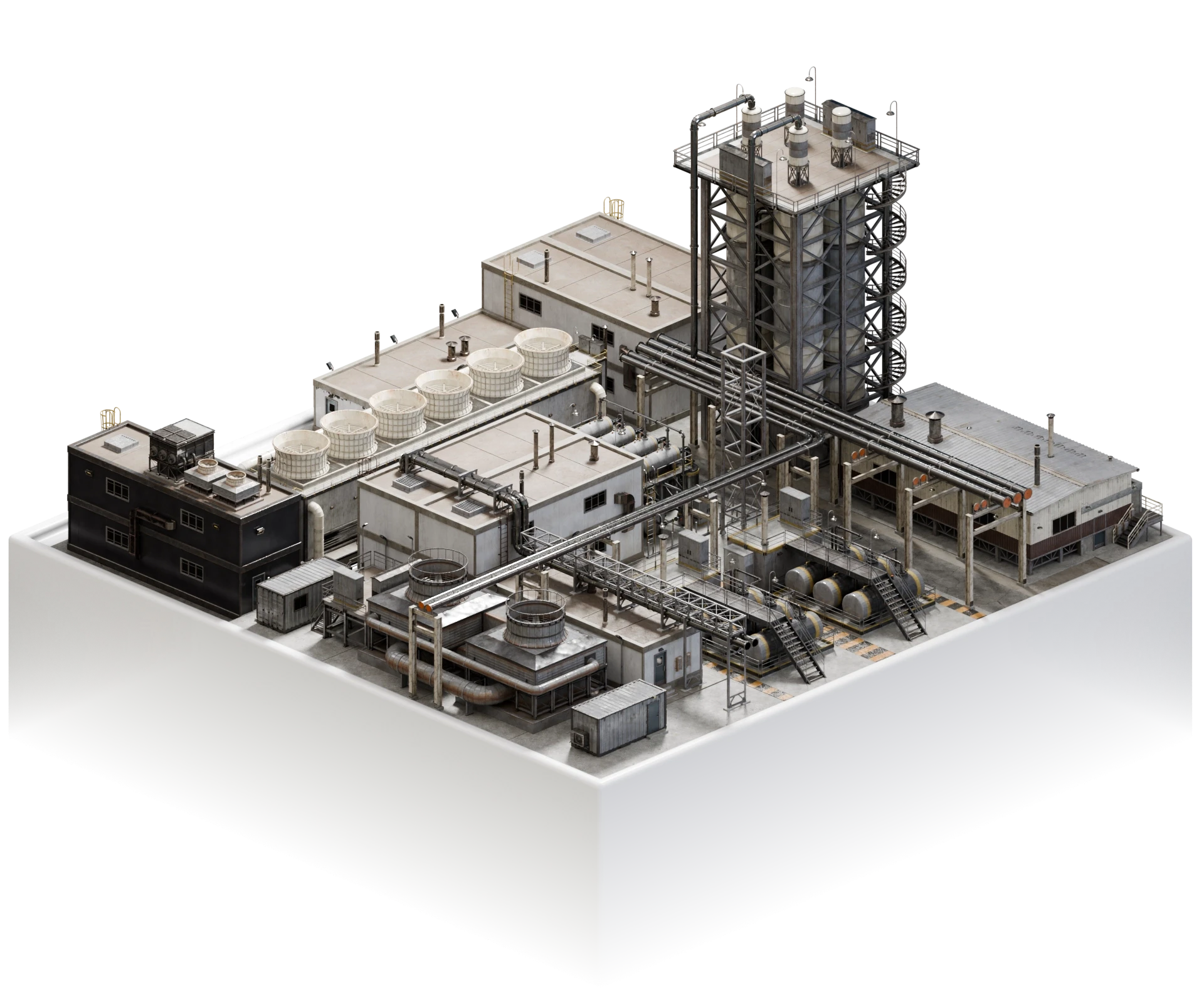
Industry & Logistics
Simulate machine flows, test new setups, and identify bottlenecks in routing or capacity — without production coming to a halt or investing in hardware that doesn’t work. Applications: warehouse planning, process optimization, safety simulations, predictive maintenance.
Construction & Real Estate
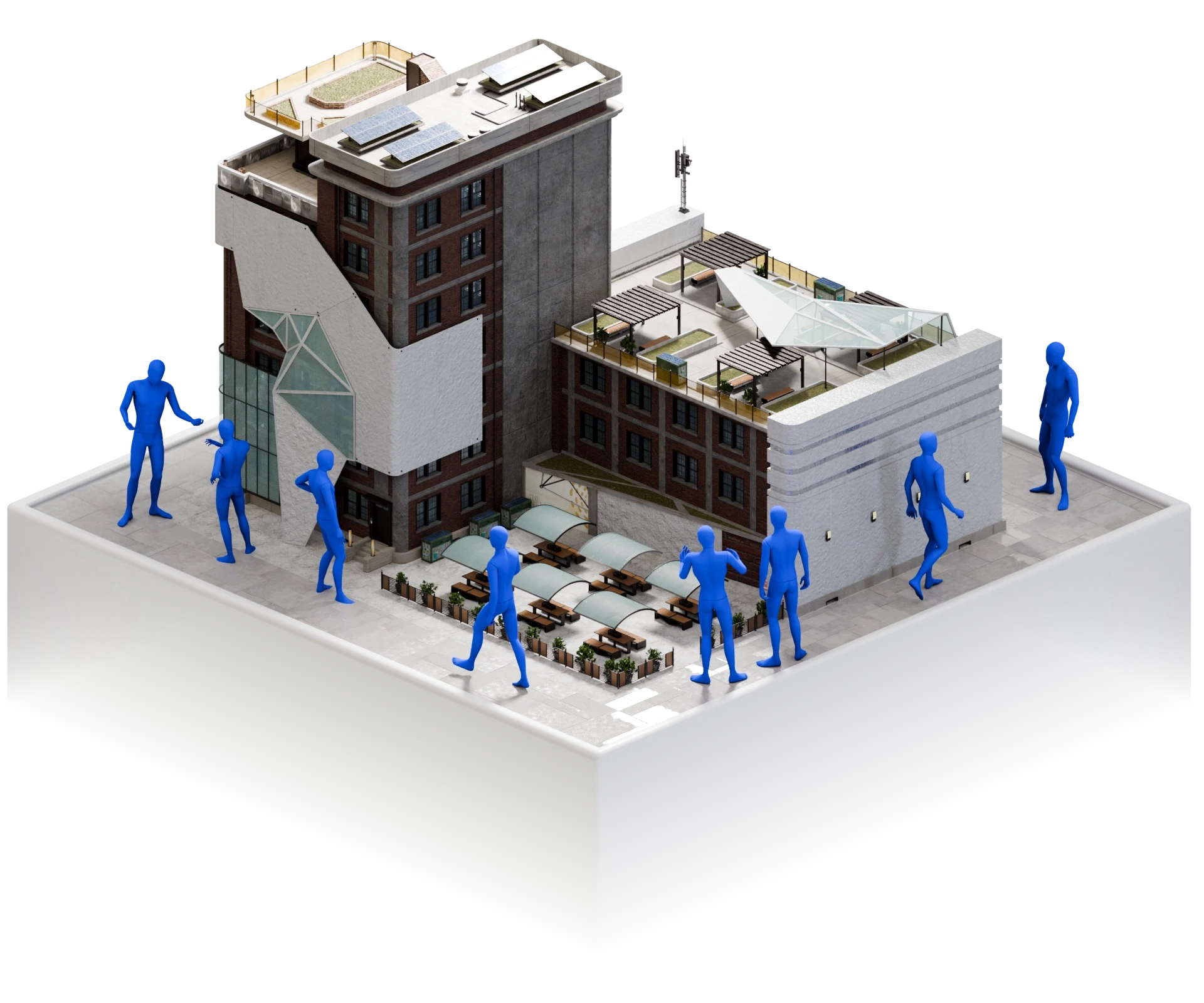
Visualize construction plans before a single shovel hits the ground. Prevent miscommunication with clients, residents, and contractors. Show stakeholders what will really change in their surroundings. Applications: impact analyses, new-build presentations, permit processes, resident engagement.
Municipalities & Areas
Make spatial plans open to discussion for everyone involved — from officials to local residents. 3D city models increase support and speed up decision-making. Applications: area development, smart city projects, co-creation, environmental visions.
Method
How does a Digital Twin work in practice?
From your existing data to a fully interactive digital environment — this is how Zayah approaches it. Start with a pilot, then scale up at your own pace.
Data capture
Create digital copy
Simulate & test
Insight & decision
Further development
CONTACT
Test decisions digitally before they have an impact on the workplace.
We will contact you within 24 hours.
Everything you want to know about Digital Twins
What is the difference between a Digital Twin and a BIM model?
A BIM model is a static design: it contains drawings, dimensions, and material data, but simulates nothing. A Digital Twin is dynamic: it simulates scenarios, shows behavior over time, and can be fed with real-time sensor data. BIM files are an excellent starting point — Zayah integrates both seamlessly.
How much does a Digital Twin cost?
The investment varies based on scale, complexity, and the desired level of detail. Zayah works with pilots: a defined project that quickly demonstrates value before larger budgets are allocated. Schedule a no-obligation conversation for a tailored estimate.
For which sectors is a Digital Twin suitable? +
Zayah has specialized solutions for three domains: construction & real estate (visualization, participation, impact analyses), industry & logistics (process optimization, routing, safety), and municipalities & area development (city models, co-creation, environmental visions). Each domain has its own approach and toolset.
For which sectors is a Digital Twin suitable? +
Zayah has specialized solutions for three domains: construction & real estate (visualization, participation, impact analyses), industry & logistics (process optimization, routing, safety), and municipalities & area development (city models, co-creation, environmental visions). Each domain has its own approach and toolset.
For which sectors is a Digital Twin suitable? +
Zayah has specialized solutions for three domains: construction & real estate (visualization, participation, impact analyses), industry & logistics (process optimization, routing, safety), and municipalities & area development (city models, co-creation, environmental visions). Each domain has its own approach and toolset.